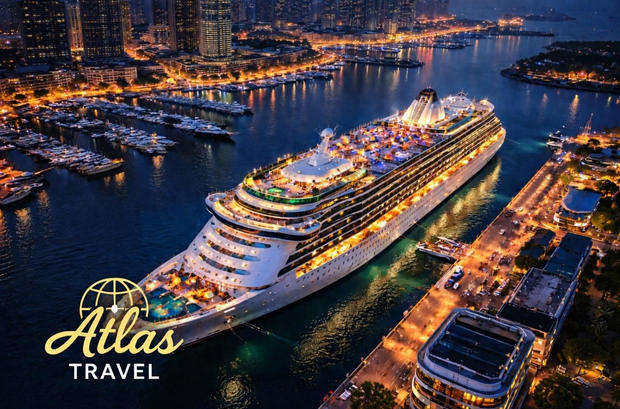
Chartering a cruise ship is not simply about accommodating a large group. It is about creating a fully immersive, controlled environment where every element of the experience unfolds within one cohesive platform.
Cruise ships are engineered for flow. Guests sleep, dine, meet, celebrate and relax in a connected environment without the friction of transportation between venues. There are no buses to coordinate, no lost momentum moving across a city and worrying about traffic delays.
This cohesion creates consistency, and consistency creates confidence.
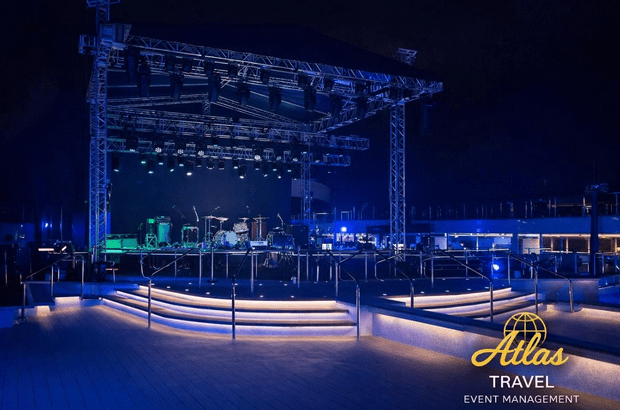
Charter programs benefit from purpose-built infrastructure: meeting spaces, theaters, lounges, dining venues, nightlife, wellness areas and AV-ready environments. Planners focus on experience design rather than infrastructure management.
Customization is a defining advantage. With exclusive use of the ship, hosts control programming, branding, pacing and access. Multiple private events can occur simultaneously while maintaining clarity and flow.
Shore experiences extend the story. Private excursions, private islands in the Caribbean and curated events allow groups to explore while returning each evening to a familiar, controlled environment. Guests experience variety without logistical fatigue.
Charters are uniquely effective for high-stakes programs…corporate incentives, entertainment-led takeovers, brand experiences, and large celebrations, because the environment supports focus and connection.
From the guest perspective, charter programs feel effortless. Information is clear. Movement is natural. The experience feels curated rather than managed.
When the venue itself becomes part of the experience, connection happens naturally.
Large group travel is often misunderstood. When a program includes hundreds or thousands of guests, especially with multiple events, entertainment, or brand visibility, it becomes an operational discipline that goes far beyond basic planning.
At this level, group travel isn’t just about making arrangements. It’s about designing systems that support volume, complexity, and real-time execution, without disrupting the guest experience.
Every decision has ripple effects. Inventory must be structured intentionally. Transportation windows become interdependent. Event schedules must account for crowd flow, staffing, venue capacity, and guest pacing. Payment deadlines, communications, and logistics must remain clear and consistent across hundreds or thousands of participants.
Even small misalignments can create big problems: a delayed transfer affects an event start, a missed message causes confusion, a poorly timed schedule disrupts energy. These aren’t theoretical, they’re realities.
That’s why large-group programs require structure, foresight, and experienced leadership, not just coordination. Logistics are foundational, but they’re only one part of the experience. Many programs include private buyouts, live entertainment, branded moments, multiple venues, and shared spaces on tight timelines. Each element must work together seamlessly.
When operations are handled properly, complexity disappears for guests. Transitions feel natural. Events feel intentional. The experience feels smooth, confident, and well-run.
It’s not the size of the program that makes it great. Execution does.
Entertainment-led travel is not simply a group trip with music added.
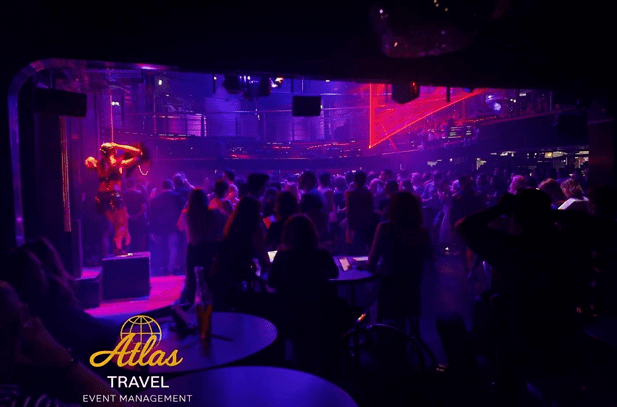
When artists, DJs, performers, or hosts are central to a program, the experience becomes a live production unfolding across destinations, venues and moments in time. These programs sit at the intersection of travel operations, event production, crowd management, and guest experience.
Entertainment sets the rhythm of the entire program. Performance schedules influence transportation timing. Sound checks affect venue access. Crowd flow impacts staffing, security and pacing. Every decision must protect energy while maintaining control.
Unlike traditional group travel, entertainment-led programs must balance two equally important needs: supporting performers and delivering an unforgettable guest experience.
Artists and production teams require technical readiness, privacy and seamless transitions. Guests expect access, excitement, and moments that feel spontaneous without chaos. Managing both requires fluency in live events and large-scale travel execution.
Production is not an enhancement. It is central to memory.
Lighting, sound, staging, and timing determine whether moments feel immersive or disjointed. At scale, even small production missteps are amplified. That’s why entertainment-led travel demands teams who understand not only how to move people, but how to shape moments.
The most successful entertainment-led programs feel effortless to guests, even though they are anything but behind the scenes. Energy is protected. Flow is maintained. The experience unfolds naturally.
Great entertainment travel doesn’t just happen on stage. It’s built behind the scenes.
What guests really remember long after a trip ends is rarely logistics. They don’t talk about room blocks, flight manifests, or schedules when they return home. They don’t recall how many buses were used or how payments were structured.
What stays with them is how the experience felt…whether it flowed, whether they felt welcomed, and whether moments felt intentional rather than rushed.
The guest with special dietary needs feels seen when a thoughtful meal arrives without having to ask. Travelers celebrating birthdays remember the surprise cake waiting at dinner. Long-time clients feel valued when they’re unexpectedly upgraded or greeted with a private car transfer. Even a simple welcome gift waiting at check-in quietly sets the tone from the very start.
Guests may not consciously notice great flow, but they immediately feel when it’s missing. When flow is right, they relax. They stop checking schedules and start being present.
Memory in group travel is emotional, not operational. That’s why the most successful programs are designed backward from the guest experience…how people should feel, rather than forward from a checklist.
That intentional approach is what transforms a well-organized trip into a truly memorable event.
WhyIncentive travel works? Because it is not a perk. It’s a signal. When designed well, it communicates value, recognition, and trust in a way no bonus, gift card, or announcement ever can. It tells top performers that their contribution matters, not just financially, but personally.
When designed poorly, it can feel transactional, generic, or forgettable. The difference isn’t the destination—it’s the intention behind the experience.
Recognition over reward Effective programs are about meaning, not extravagance. Top performers don’t need to be impressed, they need to feel seen. Curated experiences that feel thoughtful and personal carry emotional weight, driving loyalty and long-term engagement.
Alignment and execution matter Even the most exciting destination falls flat if the program doesn’t align with audience motivation, company culture, or desired experiences. Smooth execution, clear communication, seamless logistics, and visible leadership ensures participants feel valued without distraction.
Shared experiences reinforce culture Group dinners, private events, and destination activities build connection, collaboration, and belonging. Participants return with more than memories, they return motivated, loyal, and engaged.
The long-term impact Incentive travel isn’t measured during the trip, it shows up in retention, motivation, and advocacy. Done right, it becomes a signal of trust, a reflection of culture, and a shared experience that proves achievement is genuinely recognized.
Experience makes all the difference becauseGroup Travel Does Not Exist in a Controlled Environment
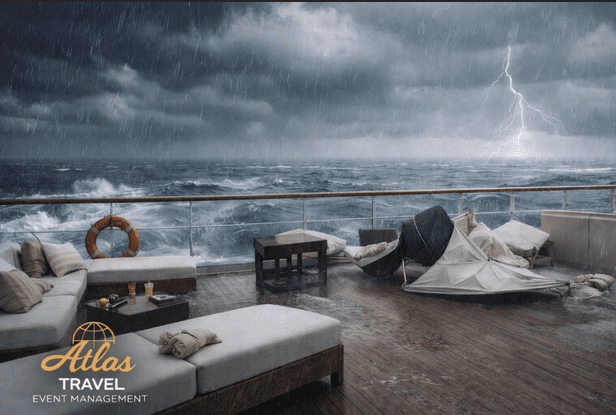
Flights change. Weather shifts. Local regulations evolve. Global events unfold without regard for carefully planned itineraries. For large-scale group programs, these realities aren’t rare exceptions, they are part of the operating landscape.
What defines a successful program is not the absence of disruption, but how the experience is managed when plans need to adapt.
Experience Creates Stability
When the unexpected occurs, guests and organizers look for leadership. Experienced teams understand that the most important response is not urgency, t’s clarity. Calm decision-making, clear communication, and visible leadership prevent uncertainty from spreading.
At scale, one unanswered question becomes dozens. One unclear message can disrupt an entire day’s flow. Experience allows teams to respond decisively without creating alarm.
Preparation Is Invisible Until It’s Needed
Strong group programs are designed with flexibility built in. This doesn’t mean planning for every possible scenario, but building systems that allow teams to adjust smoothly when conditions change:
Flight delayed and arrival shifts to midnight? We have someone on call 24/7 so your transfers are rescheduled seamlessly by on-the-ground staff.
A phone is left on the bus? We coordinate directly with the tour company to recover it.
Feeling unwell and skipping a morning tour but joining dinner later? We make it happen.
Unsure how to spend free time? Guidance, recommendations, or alternative experiences are arranged.
Clear communication channels, defined leadership roles, and trusted local partners ensure changes are absorbed without disrupting the guest experience. Most guests never realize how much coordination is happening, and that’s exactly the goal.
Calm Communication Preserves Confidence
How information is shared matters as much as the decisions themselves. Experienced teams communicate early, clearly, and calmly. They provide just enough information to keep guests informed without overwhelming them. Messaging remains consistent across channels, preventing confusion or speculation.
Guests don’t need every operational detail. They need reassurance that someone is leading, decisions are being made thoughtfully, and their experience remains the priority.
Presence Matters More Than Perfection
Unexpected moments test more than logistics, they test leadership. Guests don’t expect perfection. They expect:
To feel supported
To know who to turn to
To see that leadership is present and engaged
When leadership is visible and accessible, confidence is reinforced. Guests feel guided rather than left to navigate uncertainty on their own.
What Guests Remember
Long after a trip ends, guests rarely remember the disruption itself. They remember how it was handled and whether communication felt calm or chaotic, whether support was readily available, and whether the experience remained cohesive despite changes.
Handled well, moments of uncertainty can actually strengthen trust in the program and the team behind it.
Why Experience Matters
Unexpected moments are part of global travel. What defines the experience is not whether plans need to adapt, but who is leading when they do. Experienced, on-the-ground travel leadership provides guests and organizers with confidence that the experience is being handled thoughtfully, calmly, and with intention, even when conditions change.
That intentional approach is what transforms a well-organized trip into a truly memorable event.